
Laser X Laser Tag Instructions: A Comprehensive Guide (Updated 04/28/2026)
Welcome! This guide details everything needed for exciting Laser X games, offering a safe, clean, and adaptable experience for all ages and group sizes;
Today is 04/28/2026 14:04:08 ()
Laser X represents a thrilling evolution in the world of active entertainment, offering a safe and engaging experience for players of all ages. Unlike traditional shooting sports like paintball or airsoft, Laser X utilizes completely harmless infrared beams, eliminating the need for protective gear and messy cleanup.
This makes it an ideal choice for parties, family gatherings, corporate events, or simply a fun outing with friends. The versatility of Laser X allows for adaptable game designs, fitting seamlessly into various settings – from dedicated indoor arenas to outdoor spaces. Whether you’re seeking casual fun or a competitive challenge, Laser X delivers an exhilarating experience.
Understanding the core equipment and establishing clear game rules are crucial for maximizing enjoyment. Effective communication amongst players ensures a smooth and engaging gameplay experience.
What is Laser X? ‒ Safety and Cleanliness
Laser X distinguishes itself from paintball and airsoft through its unwavering commitment to safety and cleanliness. Traditional shooting sports involve projectiles – paintballs or pellets – requiring protective gear and resulting in post-game cleanup. Laser X, however, employs entirely safe infrared beams that pose no risk of injury to players.
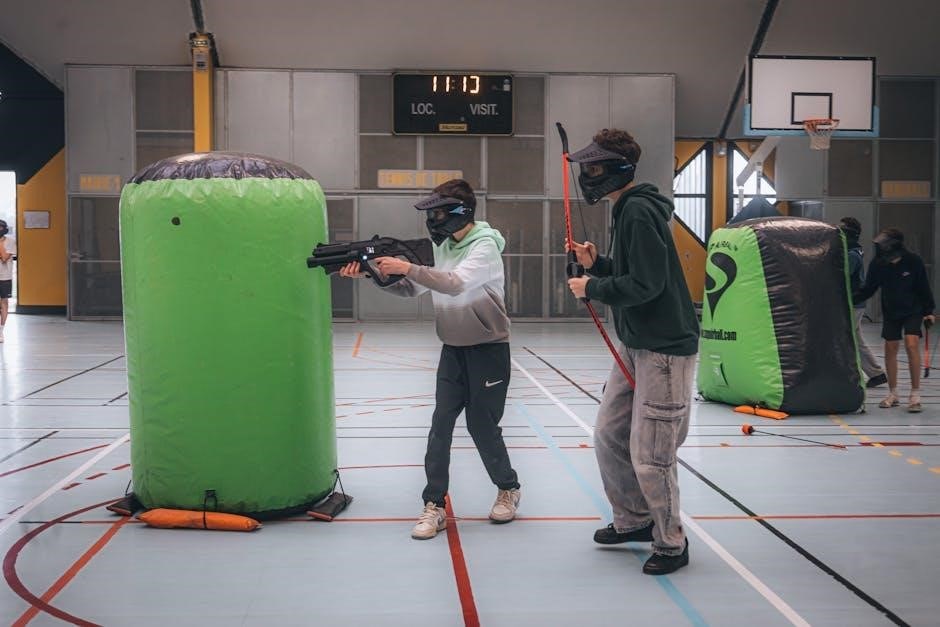
This fundamental difference makes Laser X accessible to a wider range of participants, regardless of age or physical ability. The absence of projectiles also eliminates the mess associated with other shooting games, ensuring a hassle-free experience. Players can focus solely on the excitement of the game without concerns about safety or cleanup.
Enjoy a fun, active experience knowing Laser X prioritizes a secure and pristine playing environment.
Laser X vs. Paintball & Airsoft
Comparing Laser X to paintball and airsoft reveals key distinctions. While all three are shooting games emphasizing strategy and tactical thinking, Laser X offers a uniquely safe and clean alternative. Paintball and airsoft necessitate protective gear – masks, vests, and sometimes full body coverage – to mitigate the impact of projectiles.
Laser X eliminates this requirement entirely, utilizing harmless infrared beams. Furthermore, paintball and airsoft invariably involve post-game cleanup to remove paint or pellet residue. Laser X leaves no trace, simplifying setup and takedown. This makes Laser X ideal for diverse locations, including indoor arenas, family events, and corporate retreats.
Laser X’s accessibility and convenience broaden its appeal, offering fun for all.
The Versatility of Laser X ― Settings & Groups
Laser X’s adaptability is a significant advantage, seamlessly fitting various environments and group dynamics. It excels in dedicated indoor arenas, transforming spaces into immersive battle zones. However, its portability extends play to outdoor locations like backyards, parks, or even paintball/airsoft fields, offering a fresh experience.
Laser X accommodates any group size, from intimate family gatherings to large corporate events. The game’s flexibility caters to diverse player preferences – casual fun-seekers or competitive strategists. Whether organizing a birthday party, team-building exercise, or simply a weekend activity, Laser X delivers excitement.
Its inclusive nature ensures everyone can participate, fostering memorable experiences.

Understanding the Laser X Equipment
Familiarize yourself with the core components: the blaster and vest. Understanding their functions – aiming, firing, and registering hits – is crucial for gameplay success.
The Laser X Blaster ‒ Core Components
The Laser X blaster is your primary tool for engaging opponents. It features an infrared emitter, responsible for sending out the safe laser beams that register tags; Accuracy and range are key, allowing for tactical play.
Essential components include the trigger, used to fire the blaster, and the targeting system – often a sight – to aid in aiming. Many blasters also have indicator lights displaying firing status and remaining ‘lives’ or power.
Consider the grip for comfortable handling during dynamic movement. The blaster’s design prioritizes ease of use, enabling players of all ages to quickly learn and participate. Understanding these core components will significantly enhance your Laser X experience, allowing for strategic gameplay and improved accuracy.
The Laser X Vest ― Sensor Locations
The Laser X vest is crucial for registering hits and tracking your score. It’s equipped with multiple sensors strategically placed to ensure accurate tagging. Key sensor locations typically include the chest, back, and shoulders – areas easily targeted during gameplay.
Understanding sensor placement is vital for both offense and defense. Aiming for these specific zones guarantees a successful tag, while awareness of their location helps you avoid incoming fire. Some vests may also feature sensors on the arms or legs, increasing the challenge.
Proper vest fit is essential; it should be snug but not restrictive, allowing for freedom of movement. A well-fitted vest ensures sensors function optimally, providing a fair and immersive Laser X experience.
Powering Up Your Laser X Gear
Before each game, ensuring your Laser X blaster and vest are adequately powered is paramount. Typically, both components utilize AA batteries, though specific models may vary – always consult your equipment manual. Fresh batteries guarantee optimal performance and prevent mid-game interruptions.
To power on the blaster, locate the power button – usually prominently displayed. The vest will similarly have a power switch, often accompanied by an indicator light confirming activation. Verify both devices are illuminated, signaling they’re ready for action.
Battery life depends on usage, but it’s wise to have spares readily available, especially during extended play sessions. Low battery can hinder accuracy and responsiveness, impacting your overall game experience.
Adjusting Blaster Settings (If Applicable)
Some Laser X blaster models offer adjustable settings to customize gameplay. These may include options for fire rate, blaster strength, or even team affiliation. Consult your specific equipment manual to determine if your blaster has these capabilities and how to access them.
Adjusting settings can significantly alter the game dynamics; A faster fire rate might be advantageous in close-quarters combat, while increased blaster strength could improve tagging range. Experiment with different configurations to find what suits your play style.
Ensure all players are using consistent settings, or clearly communicate any variations before the game begins to maintain fairness. Understanding these adjustments enhances strategic depth and overall enjoyment.
Setting Up a Laser X Game
Proper setup is key! Define boundaries, establish clear rules, configure teams (or play individually), and choose a game variation for optimal fun.
Defining the Playing Area ― Boundaries
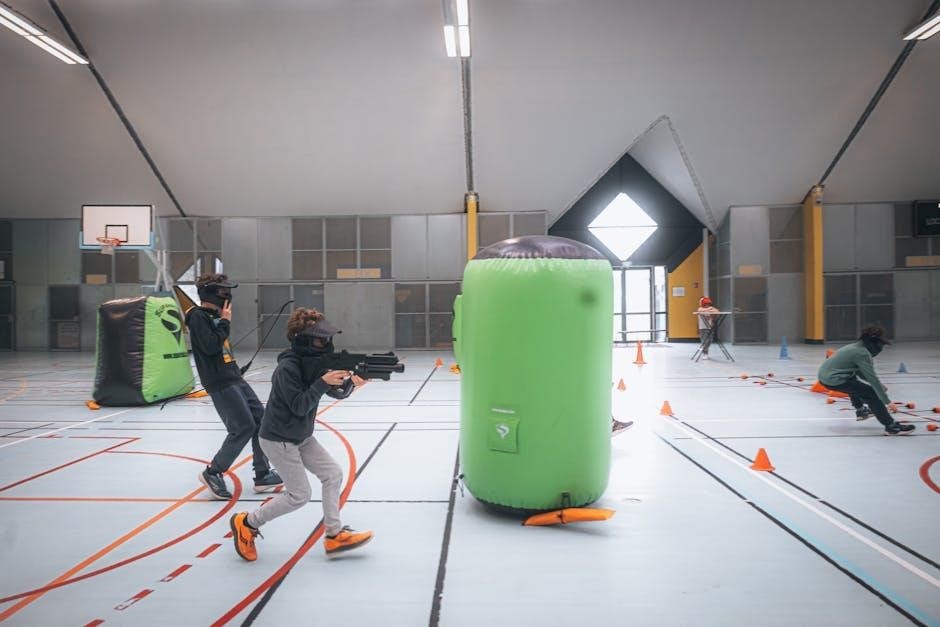
Establishing clear boundaries is crucial for a safe and enjoyable Laser X experience. Consider the space available – Laser Tag is flexible, adapting to indoor arenas, outdoor fields, or even smaller party areas. Use natural obstacles like walls, trees, or furniture to define limits, or utilize cones, tape, or inflatable barriers.
Ensure the playing field isn’t overly cluttered to allow for strategic movement. Communicate boundaries clearly to all players before the game begins. A well-defined area prevents accidental tagging outside the designated zone and minimizes potential hazards. Remember, the size of the playing area should correspond to the number of players; larger groups require more space for optimal gameplay and tactical opportunities.
Regularly check the boundaries during play to ensure they remain intact and visible.
Establishing Game Rules ― Basic Guidelines
Clear rules enhance the Laser X experience, ensuring fair play and maximizing fun for everyone. Begin by defining what constitutes a valid tag – typically, a direct hit to the vest’s sensors. Establish rules regarding respawn times, if any, and whether tagged players are immediately out or have a grace period.
Discuss “safe zones” if needed, areas where tagging is prohibited. Emphasize sportsmanship and discourage physical contact beyond tagging. Explain the scoring system – how points are awarded for tags and any bonus objectives. Consistent rule enforcement is key; designate a game master to resolve disputes and ensure fair play.
Prioritize communication; players understanding the rules will have a better experience. Adapt rules to suit the age and skill level of participants.
Team Configurations ‒ Individual vs. Team Play
Laser X’s flexibility allows for diverse team configurations. Individual play, “free-for-all,” fosters competitive spirit, where each player aims for the highest score. Team play introduces strategy and coordination, dividing players into opposing forces; Teams can be balanced based on skill level for a fairer contest.
Consider team sizes; smaller teams encourage more frequent interaction, while larger teams require more complex strategies. Assign roles within teams – attackers, defenders, or scouts – to maximize effectiveness. For larger groups, multiple teams can compete simultaneously, adding another layer of complexity.
Clearly define team boundaries and objectives before the game begins. Encourage communication and collaboration within teams to achieve victory.
Game Variations ― Capture the Flag, Team Elimination
Laser X truly shines with adaptable game variations. “Capture the Flag” demands strategic offense and defense; teams attempt to seize the opposing team’s flag while protecting their own. This variation emphasizes teamwork and map awareness. “Team Elimination” is more direct – the team that successfully tags all opposing players wins. This mode promotes aggressive play and quick reflexes.
Introduce variations like “Last Man Standing” for individual play, increasing the intensity. Combine elements – for example, a timed “Capture the Flag” with bonus points for eliminations.
Customize rules to suit the playing area and player skill levels. Regularly rotating game modes keeps the experience fresh and engaging for all participants.

Playing the Game: Core Mechanics
Success in Laser X relies on accurate aiming, strategic firing, and understanding the scoring system; tagging opponents activates vest sensors, awarding points to the shooter.
Aiming and Firing Techniques
Mastering the blaster is crucial for Laser X success. Begin by holding the blaster firmly, extending your arm, and focusing on your target. Remember, tactical thinking and a cool head are vital!
Precise aiming isn’t just about pointing; it’s about anticipating movement. Lead your shots slightly when opponents are running, and utilize quick, controlled bursts rather than holding down the trigger continuously. This conserves energy and improves accuracy.
Consider using cover to your advantage, peeking out to fire and then quickly retreating. Practice aiming at different distances to develop a feel for the blaster’s range. A steady hand and focused concentration will significantly increase your tagging rate, ultimately leading to victory!

Scoring System ― How Points are Awarded
Points in Laser X are primarily earned by successfully “tagging” opponents – hitting their vest sensors with your blaster’s infrared beam. Each successful tag awards a predetermined number of points, contributing to your overall score.
Different game modes may feature bonus points for specific actions, such as capturing flags or eliminating entire teams. Understanding these nuances is key to maximizing your score. Some systems also award points for defensive plays, like avoiding being tagged.
Keep a close watch on your score display throughout the game to track your progress and adjust your strategy accordingly. Remember, strategic thinking and a cool head are vital to winning!
Tagging Opponents ― Effective Strategies
Successful tagging in Laser X relies on a blend of accuracy, speed, and tactical awareness. Utilize the environment for cover, moving strategically to gain advantageous firing positions. Avoid predictable patterns; erratic movements make you a harder target and improve your chances of a successful shot.
Aim for the vest’s sensor locations – the more hits you land, the faster you’ll accumulate points. Teamwork is crucial; coordinate with teammates to flank opponents and create crossfires. Remember, a cool head and strategic thinking are vital for consistently tagging opponents and dominating the game!
Prioritize quick, accurate shots over prolonged aiming.
Vest Sensor Activation ‒ Understanding Hits
Laser X vests are equipped with multiple sensors strategically placed to register hits from opposing blasters. When a beam connects with a sensor, it activates, signaling a successful tag. The vest will typically provide visual or auditory feedback – flashing lights and/or sound effects – confirming the hit registration.
Understanding sensor locations is key to effective play; aiming for these areas maximizes your tagging success. Remember, a direct hit isn’t always necessary; even glancing blows can activate sensors. Consistent tagging relies on recognizing how the vest responds to impacts, allowing you to adjust your aim and strategy accordingly.
Quick reactions are essential!

Advanced Laser X Tactics
Elevate your gameplay with strategic movement, team communication, and environmental awareness for a competitive edge. Coordination is vital for success!
Strategic Movement and Cover
Mastering movement is key to dominating Laser X. Avoid predictable patterns; utilize quick dashes, flanking maneuvers, and constant repositioning to confuse opponents. Always be aware of your surroundings and identify potential cover points – walls, obstacles, and even teammates can provide crucial protection.
Don’t remain stationary for long, as you become an easy target. Practice “peek and shoot” tactics, briefly exposing yourself to fire before quickly retreating back to cover. Utilize the playing environment to your advantage, creating chokepoints and ambushes. Remember, a tactical player isn’t just about accurate shots, but also about intelligent positioning and unpredictable movement. Keeping a cool head is vital!

Team Communication ‒ Coordination is Key
Effective communication dramatically elevates your team’s performance in Laser X. Designate a simple call-out system for enemy locations – “Left flank!”, “Behind you!”, or numerical coordinates. Share information about opponent movements, low health teammates, and potential ambush points. Constant updates ensure everyone remains aware and can react swiftly.
Pre-game planning is also crucial. Discuss strategies, assign roles (e.g., attacker, defender, scout), and establish rally points. During the game, maintain clear and concise communication, avoiding unnecessary chatter. A coordinated team anticipates enemy actions, supports each other, and maximizes scoring opportunities. Remember, understanding shared ideas improves the play experience!

Utilizing the Playing Environment
Mastering the arena is vital for Laser X success. Use obstacles – walls, barriers, and structures – for cover, concealment, and strategic maneuvering. Flanking routes and alternate pathways can surprise opponents and create advantageous firing positions. Observe the layout to identify chokepoints and high-traffic areas.
Darker areas offer concealment, but limit visibility. Brightly lit zones provide better aiming but reduce cover. Utilize these contrasts to your advantage. Remember, tactical thinking and a cool head are essential. Adapt your strategy based on the environment, and anticipate how opponents will use it. A well-utilized arena transforms from a playing field into a strategic advantage.
Power-Up Strategies (If Applicable)
If your Laser X system includes power-ups, understanding their effects is crucial. Common power-ups might include rapid-fire, shield activation, or score multipliers. Prioritize acquiring power-ups that complement your playstyle – aggressive players benefit from rapid-fire, while defensive players might prefer shields.
Be mindful of power-up duration and timing. Activate shields before entering high-traffic areas or facing a direct assault. Use rapid-fire to quickly eliminate opponents or overwhelm defenses. Coordinate with teammates to maximize power-up synergy. Remember, strategic power-up usage can dramatically shift the game’s momentum, turning the tide in your favor.

Troubleshooting Common Issues
Encountering problems? This section provides quick fixes for blaster malfunctions, vest sensor failures, low batteries, and game resets for uninterrupted play.
Blaster Not Firing ― Basic Checks
Is your Laser X blaster failing to activate? Don’t worry, several simple checks can resolve this issue quickly. First, ensure the blaster is powered on – verify the power button is firmly pressed and the indicator light is illuminated.
Next, confirm sufficient battery power. Low batteries are a common culprit; try replacing them with fresh ones or fully charging rechargeable batteries. Check for obstructions in the emitter lens – dust or debris can block the laser. Gently clean the lens with a soft, dry cloth.
Verify proper game settings if your blaster has adjustable options. Finally, ensure the blaster is not in a safety lock mode, if applicable. If problems persist, consult the full manual for detailed troubleshooting steps.
Vest Not Registering Hits ― Sensor Issues
Is your Laser X vest failing to register tags? This often points to sensor-related problems. Begin by inspecting the sensors on the vest for any visible damage or obstructions – ensure they are clean and free of debris.
Confirm the vest is powered on and the indicator light is functioning correctly. Check the vest’s fit; a loose fit can prevent accurate sensor activation. Ensure the vest is snug but comfortable. Verify blaster compatibility – some systems require specific blaster-vest pairings.
Test each sensor individually by carefully tagging each location. If specific sensors consistently fail, they may require replacement. Consult the manual for detailed sensor testing procedures.
Low Battery ‒ Replacement/Charging
Experiencing power issues during your Laser X game? Low batteries are a common culprit. First, check the battery indicators on both the blaster and the vest. If the lights are dim or flashing, it’s time for a power boost!
For blasters and vests using replaceable batteries, ensure you have fresh batteries of the correct type readily available. For rechargeable models, connect the device to the provided charger and allow sufficient time for a full charge – consult the manual for charging times.
Avoid mixing old and new batteries, and always insert them with the correct polarity. Consider having spare, fully charged batteries on hand for uninterrupted gameplay.
Game Resetting ‒ Starting a New Round
Ready for another thrilling round of Laser X? Properly resetting the system ensures accurate scoring and fair play. Most Laser X systems feature a reset function, often a button combination on the blaster or a system-wide reset option.
Consult your specific Laser X manual for the exact reset procedure. Typically, this involves powering down all units, then powering them back on in a specific sequence. Ensure all players power cycle their gear simultaneously for a clean reset.
Verify that all scoring data has been cleared before beginning the new game. A successful reset will prepare the system for fresh competition and exciting new strategies!